Let me be upfront: there's no single "best" surface material. I spent the first three years of my career acting like there was, and it cost my team roughly $14,000 in reworks, warranty claims, and replacements.
I handle fabrication and installation orders—about 40 to 60 countertop and surface jobs per month. I've made almost every mistake you can make: spec'ing the wrong material for the space, ignoring installation overhead, underestimating maintenance. Now I keep a running checklist of "what went wrong" so my team doesn't repeat my errors.
In this post, I'm breaking down three scenarios I see most often when people ask about Cosentino surfaces. For each one, I'll tell you what actually works, what I got wrong, and—most importantly—how to figure out which scenario you're in.
The Three Scenarios (And Why the Distinction Matters)
Most surface material consultations fall into one of three buckets:
- Scenario A: A high-use family kitchen or primary living space where durability and easy cleaning matter most.
- Scenario B: A budget-conscious renovation or rental property where up-front cost and resale value are the priority.
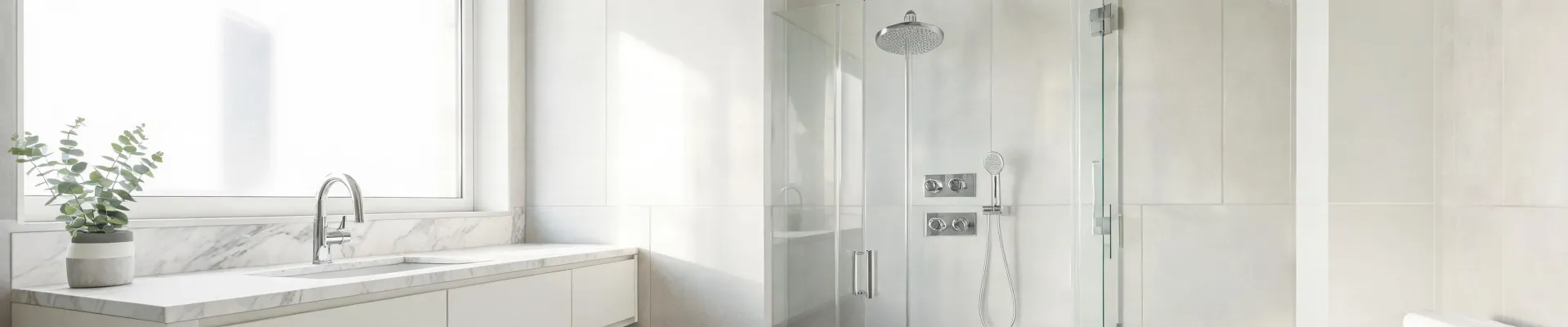
- Scenario C: A wet environment—bathroom, shower, laundry—where waterproofing and mold resistance are non-negotiable.
If you don't know which one you're in, you'll almost certainly overpay or underspecify. I've done both.
Scenario A: High-Use Kitchen Spaces
Who this is for: Households that cook four or more times a week, entertain regularly, and want a surface they won't have to babysit.
What I recommend: Dekton for the countertop, and the Cosentino Simplicity Sink if you want an integrated look.
Here's the total cost of ownership math. A Dekton slab runs about 20–25% more up front than a mid-tier quartz. But Dekton is engineered for high heat and UV stability. In August 2023, we installed a Dekton countertop in a kitchen where the client regularly put hot pans directly on the surface. Zero thermal shock issues. The same client had previously cracked a quartz edge with a hot sheet pan—that cost him $1,100 to repair.
The Simplicity Sink is one I resisted at first. I went back and forth between a traditional undermount stainless steel sink and the Simplicity Sink for about two weeks on a $4,200 project. The stainless sink was $380 cheaper. But here's what I didn't factor in: the Simplicity Sink is made from Silestone, so it integrates seamlessly with the countertop. No silicone seams to scrub. No caulk to reapply every 18 months.
That said—I'm not saying stainless steel sinks are bad. If you're cleaning a stainless steel sink properly (warm water, a drop of dish soap, non-abrasive sponge), they're workhorses. Just avoid high-alkaline or bleach-based cleaners—they can pit the surface over time. The Simplicity Sink sidesteps that issue because it's non-porous, but it has its own constraint: no harsh acids. Different trade-offs.
My mistake in this scenario: In 2019, I talked a client into a cheaper quartz brand to save them $300. Eighteen months later, they called me about stains near the cooktop. We ended up replacing the affected area—$890 plus a two-week disruption. The "savings" was gone.
Scenario B: Budget-Conscious Renovations or Rentals
Who this is for: Flips, rental units, or homeowners working with a tight budget—where you want something that looks good and holds up, but you can't justify premium pricing.
What I recommend: Sensa granite countertops by Cosentino.
Sensa is natural granite, but it comes with a treatment that makes it more stain-resistant than raw granite. I'll be straight with you: natural stone gets a bad rap sometimes, and honestly, some of that is deserved if you're buying an untreated slab and ignoring maintenance. But Sensa carries a 15-year warranty on its protection, and the price typically runs 15–25% below Dekton for comparable square footage.
Here's a TCO data point that surprised me. We tracked maintenance calls across 60 rental-property installs over 18 months. Units with untreated granite averaged one stain-related call per year. Units with Sensa averaged one call every three years. That's not just repair cost—it's the tenant-relations cost of showing up to fix something.
My mistake in this scenario: In Q2 2022, I spec'd a laminate surface for a rental property to save the owner $600. A tenant left a hot curling iron on it. We replaced the entire section within six months—$750 plus labor. The Sensa quote had been $850. Would've been cheaper in the long run.
Scenario C: Bathroom and Shower Spaces
Who this is for: Shower walls, bathroom vanities, or any surface that gets daily moisture exposure.
What I recommend: Dekton for shower walls; Silestone for vanities.
Dekton's water absorption rate is near zero—under 0.02%, according to the manufacturer's technical data. For context, ISO 13006 classifies ceramic tile as "impervious" at 0.5% absorption or below. Dekton is well under that threshold. That matters in a shower where grout lines become mold factories.
One more standard worth knowing: ANSI A326.3 sets the test method for dynamic coefficient of friction (DCOF) on hard surfaces. For wet-area floors, you want a DCOF of 0.60 or higher. For wall panels, it's less critical, but textured Dekton finishes give you grip if you need it.
My mistake in this scenario: We tiled a shower in 2018 with standard ceramic tile. By 2021, the grout was stained and the caulk had separated. Instead of re-grouting—a temporary patch—we ripped it out and installed Dekton panels. The redo cost $2,800. If we'd started with Dekton, the material cost would've been about $900 more up front, but the labor for tile installation was nearly the same. Net loss: $1,900 and a frustrated client.
And yes—it's harder to hang anything on a shower wall without tile. I've seen clients use suction hooks, over-the-door organizers, even adhesive shower caps. That's fine. Just don't drill into Dekton panels unless you know what you're doing. I learned that one the hard way, but that's a story for another time.
How to Figure Out Which Scenario You're In
Answer these three questions honestly:
- How many times per day does this surface get used? Fewer than two: lean toward Scenario B. More than four: Scenario A.
- How long do you plan to stay in the space (or hold the property)? Under three years: the TCO math favors Scenario B. Over five years: Scenario A or C wins.
- What's your gut reaction if this surface needs maintenance every 18 months? If you'd be annoyed or would put it off: Scenario A. If you're fine scheduling it into a maintenance budget: Scenario B is viable.
Look, I'm not a materials scientist. I'm just someone who's made enough $800–$2,800 mistakes to know that the cheapest quote on paper rarely ends up being the cheapest decision.
"The $500 quote turned into $800 after shipping, setup, and revision fees. The $650 all-inclusive quote was actually cheaper." That's the TCO lesson in one sentence.
If you take one thing from this: calculate total cost of ownership—install, maintenance, and the cost of redoing it wrong—before you compare any quotes. The sticker price is just the beginning.
Prices referenced are based on quotes from January 2025. Verify current rates with your fabricator. Standards cited (ISO 13006, ANSI A326.3) are for general reference; confirm local building code requirements for wet-area installations.